

Leather bags are iconic pieces in any wardrobe, not only for their elegance but also for the durability they offer. However, when stored in damp or enclosed environments for a long time, they can become the perfect setting for mould to appear. This type of fungus is not only unsightly, but it can also compromise the integrity of the material if it is not treated in time. Knowing how to clean a leather bag with mould properly is crucial to preserve its appearance, texture, and value.
Many people tend to think that mould on leather is a sign that the item is beyond saving, but that is not always the case. In fact, when you act quickly and use the right products, it is entirely possible to bring a leather bag affected by humidity back to life. To do so, you need to understand how this material behaves and which methods are safe both for cleaning and for subsequent care.
Throughout this article, we will explain step by step how to remove mould effectively, which products to use, which to avoid, and how to prevent it from coming back. All in clear, straightforward language, so you can recover that bag you thought was lost.
Why does mould appear on leather bags?
Leather is a natural material that, although treated to be more durable, is still sensitive to environmental conditions. Its porous surface absorbs moisture, creating an ideal environment for fungi and bacteria to thrive. Mould needs very little to develop: warmth, darkness, poor ventilation, and some moisture. If you store your bag at the back of a wardrobe, inside a bag, or without protection, it is only a matter of time before these microorganisms find their place.
In addition, if the leather has not been properly nourished or sealed, it is more exposed to absorbing ambient moisture. The same happens when bags are stored after being used in the rain without allowing them to dry completely. These oversights, although they may seem minor, are enough for the characteristic whitish or greenish mould dust to appear over time, accompanied by a strong, unpleasant odour.
How to tell if your leather bag has mould
Not every residue on the surface of leather is mould. Sometimes it is dust, dirt, or even residue from previous cleaning products. To confirm it is mould, check for irregular whitish, greenish, or greyish spots that seem superficial but reappear after wiping with a dry cloth. Another very distinctive sign is the smell: mould gives off an intense damp odour that is hard to mistake.
If you also notice that the leather has lost flexibility in the affected areas or that there is a powdery layer that lifts when you rub gently, it is probably a well-established fungal colony. The sooner you intervene, the greater the chances of fully restoring the bag.
How to clean a leather bag with mould without damaging it
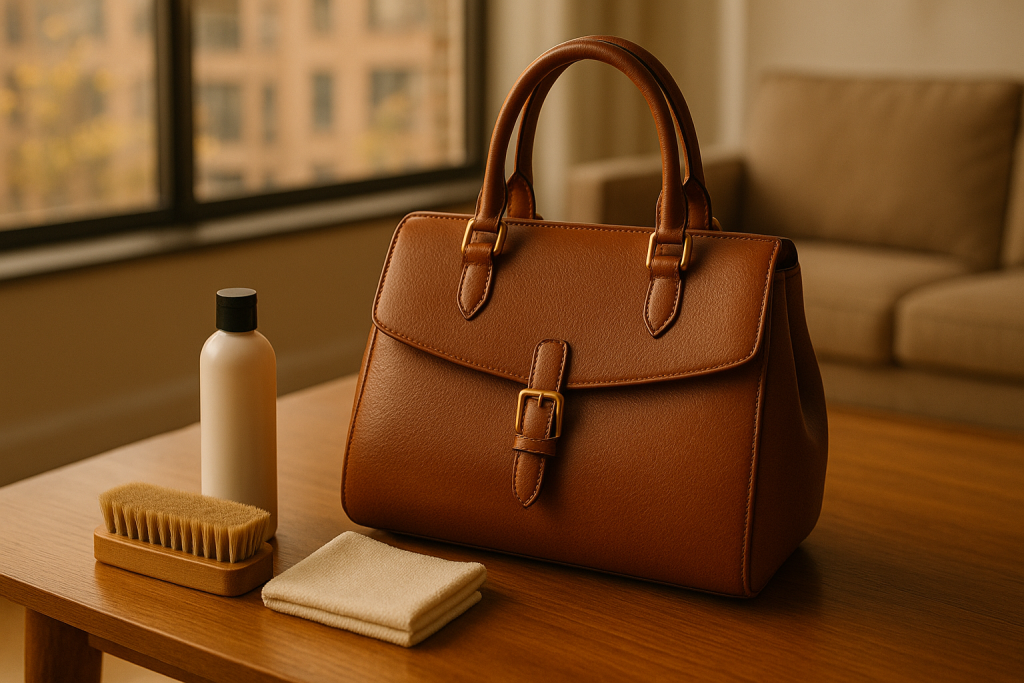
The first step, before any product or treatment, is to take the bag outside, preferably to a shaded, well-ventilated area. This prevents microscopic spores from spreading inside your home. Using a soft cloth or a natural-bristle brush, remove as much dry mould as possible from the surface without rubbing hard. This step is delicate because, if the leather is very dry or deteriorated, you may cause irreversible scratches.
Once the excess has been removed, it is time to apply a cleaning solution. One of the most effective and safest mixtures for leather is one part white vinegar to one part distilled water. Lightly dampen a clean cloth with this solution (do not soak it) and clean the entire affected area using circular motions. Vinegar acts as a natural antifungal and does not damage the material if used in moderation. Avoid using alcohol, ammonia, or abrasive products: they could dry out the leather or alter its colour.
After cleaning, allow the bag to air-dry, without exposing it to direct sunlight or heat sources such as hair dryers or heaters. Leather needs to dry slowly to avoid warping or cracking.
Which products are best for treating mouldy leather
In addition to vinegar, there are specific products designed to treat leather with mould. pH-neutral leather cleaners are a good option, provided they do not contain harsh solvents. Some brands specialising in shoe care or leather goods offer antifungal solutions formulated specifically for delicate leathers.
After cleaning, it is highly recommended to apply a leather conditioner. This product moisturises the surface and protects it from future damage. When applying the conditioner, use a microfibre cloth and gentle motions. Leave it to work for several hours before storing the bag.
If the mould has penetrated deeply, or the bag has significant sentimental or financial value, the most sensible option is to consult a leather restoration specialist. Trying to clean embedded mould without the proper knowledge can worsen the bag’s condition.
How to prevent mould from coming back
Prevention is always the best strategy. Leather needs to breathe, so never store a leather bag inside plastic bags or enclosed spaces without ventilation. Use cotton bags or breathable covers. Store the bag in a dry place where ambient humidity does not exceed 50%.
Another key tip is to air out your bags regularly, even if you do not use them. Once a month, take them out of the wardrobe, let them breathe for a few hours, and check them for any signs of moisture. You can place silica gel sachets or dehumidifiers in the drawers or shelves where you store them.
In addition, if you live in humid areas or near the sea, take special care. Salt and humidity combine to create a harsh environment for natural leather.
What to do if the damage is irreversible
There are situations where, no matter how careful you are, mould has deteriorated the leather so much that it has lost its colour or texture, or has begun to crack. In these cases, the first step is to assess whether the bag can be restored with a deep clean and intensive conditioning. Sometimes, the results are surprising.
However, if the internal structure of the leather has been compromised, or if permanent black stains have appeared, it is best to accept that the bag has reached the end of its life. You can try to repurpose it for other uses, such as decoration or lower-value pieces, or take it to specialised leather recycling points.
Frequently asked questions about mould on leather bags
No. Bleach is too harsh for leather and can damage it irreversibly.
If used correctly and left to air out, the smell disappears completely once it dries.
Yes, as long as they do not contain oils that could stain the leather. Dried lavender sachets or activated charcoal are safe options.
It is not as effective as vinegar, and using it on leather can leave residue that is difficult to remove.
Conclusion
Cleaning a leather bag with mould is not an impossible task, but it does require patience, care, and the right products. Leather, as a living material, needs specific care and good prevention. Acting in time makes the difference between losing a bag and restoring its original splendour.
These kinds of issues may seem like a disaster at first, but with the right knowledge and a rigorous approach, the results can be remarkable. If you follow these steps, you will be able to extend the lifespan of your leather bags and keep them in the best condition, even in challenging climates.