

Introduction: The importance of choosing the right leather in leather goods
When we think of high-end bags, wallets, or accessories, one of the first factors defining their quality is the type of leather from which they are crafted. In leather goods, leather is not just a material; it is the foundation of the product’s entire identity. Its texture, resistance, appearance, and aging process will determine both the functionality and style of each piece.
In the process of creating items for Lauburu Spain, a firm specializing in leather bags, I have learned that knowing the specific characteristics of each type of leather is crucial—not only for designing aesthetically attractive products but also for guaranteeing their durability and performance over time.
This article provides a comprehensive guide to the types of leather most commonly used in leather goods and their main characteristics. The goal is to offer you a clear and professional insight to help you make informed decisions, whether you are starting out in this sector or looking to refine your criteria.
Cowhide: Strength and versatility for durable products
Cowhide is probably the most common and valued leather in the world of leather goods, and this is no coincidence. This type of leather stands out for its high resistance to wear, its moderate thickness, and its excellent ability to adapt to different finishes and manufacturing techniques.
One of the main advantages of cowhide is its versatility. It adapts perfectly to both structured and more relaxed designs, making it the preferred choice for bags, briefcases, backpacks, belts, and even footwear. In Lauburu Spain’s collections, this type of leather is used when durability is sought without sacrificing style.
Another outstanding quality is its aging process. Good cowhide develops a patina over time that beautifies the piece, adding character and a sense of history. Depending on the tanning method (vegetable or chrome), the finish can be more natural or more treated, which influences its final appearance.
Of course, it is not without its drawbacks. Cowhide can be somewhat heavier than other types of leather, so it is not always ideal for very light or small products. Even so, its balance between aesthetics, performance, and price makes it an infallible material for many manufacturers.
Goatskin: Lightness and flexibility for fine details
Goatskin, less known by the end consumer but highly valued by artisans, is another major player in leather goods. Its fibrous structure and fine grain give it a unique texture—softer than cowhide, yet with good resistance to scratches and deformation.
Thanks to its flexibility and lightness, this type of leather is frequently used in items requiring precision and a soft touch: wallets, document holders, interior bag details, and linings. In my writing work for Lauburu Spain, I have learned that many luxury brands opt for goatskin when seeking a refined finish and a pleasant tactile experience.
Aesthetically, goatskin has a surface with very small pores and a natural shine that is accentuated with certain finishes. This characteristic makes it stand out especially in products seeking a classic and elegant air. Furthermore, it is easy to dye, meaning a wide range of colors is available.
As a weak point, we could mention that, being thinner, it is not the best option for products requiring significant structure or high tensile strength. However, its lightness makes it a fantastic choice to complement more robust leathers within the same item.
Sheepskin: Softness and elegance in luxury products
Sheepskin is probably the softest of all traditional leathers. This characteristic makes it a very popular choice for fashion items that aim to convey luxury, elegance, and exclusivity. However, it is also one of the most delicate.
In the inspiration catalog for brands like Lauburu Spain, sheepskin is positioned as a premium option for evening bags, feminine accessories, and pieces with a focus more on aesthetics than functionality. Its fine grain, silky texture, and excellent dye absorption capacity allow for vibrant and sophisticated finishes.
A particularity of this leather is its extreme malleability. It is perfect for soft, moldable designs, although it requires special care to avoid wrinkles and permanent marks. Conversely, its low thickness limits its use in items requiring high structural resistance.
Due to its natural elegance, sheepskin is often processed with vegetable tanning or combinations that seek to maintain its appearance as naturally as possible. This enhances its beauty but also demands greater attention when it comes to maintenance.
Pigskin: Porous texture and economy for linings and reinforcements
Pigskin is one of the less glamorous options, but it plays an essential role in the leather goods industry. Its texture is very particular, with large and clearly visible pores, making it easily recognizable.
What makes it a recurring choice is its economy and resistance. Although it is not considered a luxury material, it is excellent for bag interiors, linings, and hidden pieces that need durability without requiring a perfect appearance. In the production of items for Lauburu Spain, this type of leather is used especially in internal parts, where functionality is more important than design.
Another advantage of pigskin is its high absorption capacity, which allows for the easy application of different finishes. However, due to its porosity, it can also get dirty or deteriorate more quickly if not properly protected.
It is not the best choice for exterior or luxury items, but in terms of cost-benefit, it is a leather that has earned its place in the world of leather goods.
Buffalo Leather: Robustness and character for rustic pieces
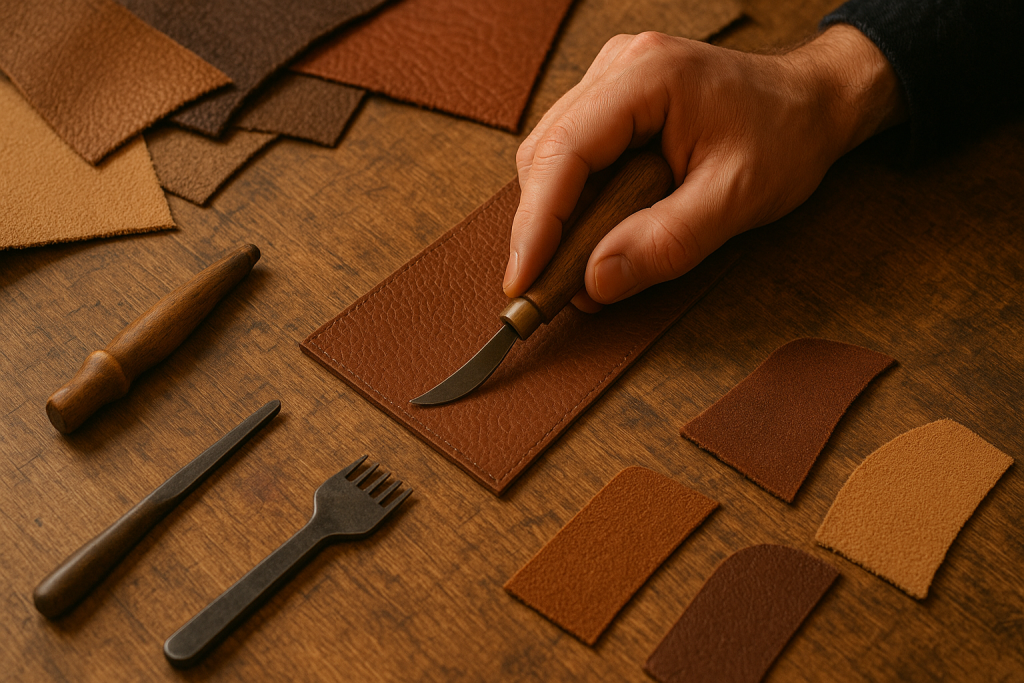
Buffalo leather is the ideal choice for those seeking a more rustic finish with plenty of personality. Its thicker structure and more irregular grain provide a robust aesthetic that is attractive in vintage or artisanal style items.
This type of leather is remarkably resistant, which is why it is used in products requiring high performance: large backpacks, travel bags, briefcases, and wide belts. At Lauburu Spain, it is common to see its use in models designed for a male audience or for naturally inspired collections.
Regarding its appearance, it usually has a more pronounced grain and a patina that evolves quickly, making it even more attractive over time. It is a leather that does not try to hide its imperfections but transforms them into part of its charm.
However, due to its initial rigidity, it requires a period of adaptation, both in the tailoring process and in use. But once broken in, it is practically indestructible.
Vegetable Tanning vs. Chrome Tanning: Differences and applications
In addition to the type of animal the skin comes from, a crucial factor defining its properties is the type of tanning it receives. The two most common methods in leather goods are vegetable tanning and chrome tanning.
Vegetable tanning: This method uses natural tannins extracted from plants and trees. The result is a stiffer leather with a warm color that ages elegantly. It is especially valued in artisanal and sustainable pieces. At firms like Lauburu Spain, vegetable tanning is used in collections that prioritize natural aesthetics and respect for the environment. One of its greatest virtues is that, over time, it develops a unique patina that beautifies the item.
Chrome tanning: This is a more modern and faster process that uses chromium salts. The resulting leather is softer, more flexible, water-resistant, and available in a wider range of colors. It is the most used at an industrial level due to its efficiency. In products requiring greater flexibility or vivid colors, chrome tanning offers a practical and aesthetic solution.
Both types have their advantages and disadvantages, and the choice depends on the final use of the product, the desired style, and the brand’s values.
Exotic Leathers: Exclusivity and distinction in leather goods
When we talk about luxury and exclusivity, exotic leathers occupy a privileged place. These are skins that come from non-conventional animals and feature unique textures, patterns, and properties.
Among the most prominent are:
- Crocodile skin: Highly valued for its resistance and unmistakable scaly pattern. It is a symbol of extreme luxury.
- Snake skin (python): Light and with a unique natural design. It is used in details or full pieces for high visual impact.
- Ostrich skin: Recognizable by its characteristic follicles, it is very soft to the touch and extremely resistant.
- Stingray skin: With a grainy texture and a particular shine, it is one of the most resistant on the market.
At Lauburu Spain, although they are not in common use, the incorporation of some of these leathers in limited editions or special collaborations has been evaluated. While their price is high, so is their ability to distinguish a product in a saturated market.
However, the use of these skins implies ethical and legal responsibility. Many are regulated by international agreements such as CITES, which requires clear traceability and certifications of legal and sustainable origin.
Factors to consider when selecting leather for your products
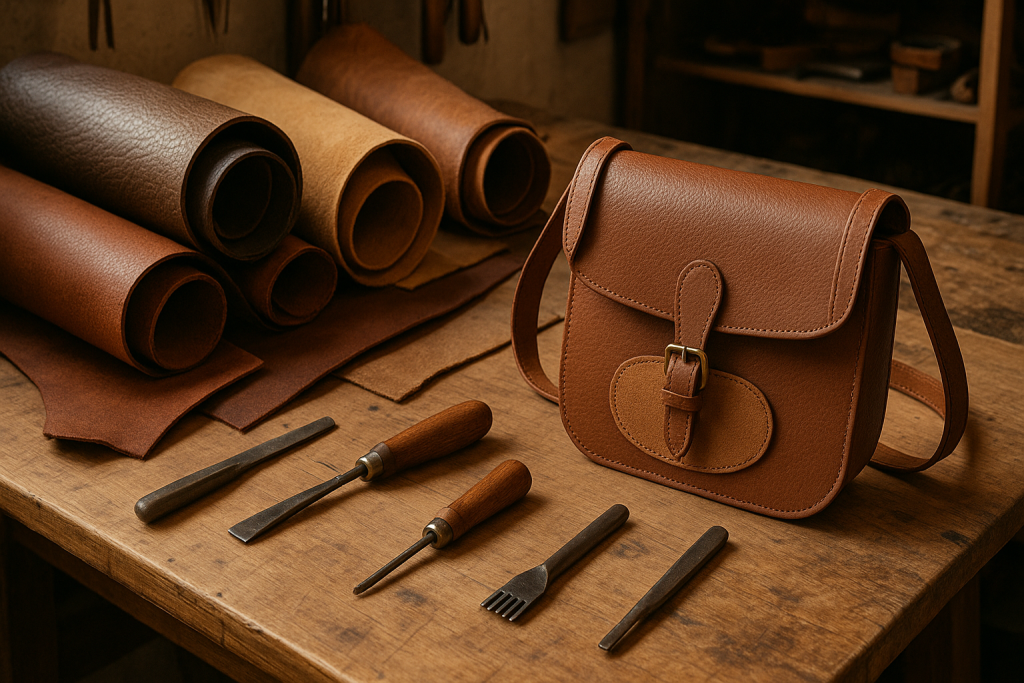
Selecting the right leather for a leather goods product is not a simple task. There are multiple factors that must be taken into account to ensure that the final result meets customer expectations and lasts over time.
1. Type of product: Manufacturing a wallet is not the same as manufacturing a travel backpack. Some items require stiff and thick leathers, while others need softness and flexibility.
2. Desired aesthetic: The finish, color, shine, grain… everything influences the perception of the product. Some leathers have a more natural and artisanal appearance, while others are more polished and uniform.
3. Expected durability: Depending on the use the item will receive, a leather must be chosen that resists wear, humidity, or constant friction.
4. Cost and availability: Budget is a key factor. Leathers such as crocodile or ostrich can triple the cost compared to good cowhide. Additionally, supply ease must be considered.
5. Brand values: In companies like Lauburu Spain, which value sustainability and artisanal quality, the type of tanning and the origin of the leather also influence the choice.
Choosing the right leather is a strategic decision that combines design, functionality, and brand philosophy.
Conclusion: Leather as a key element in the quality of the final product
In the world of leather goods, leather is everything. It is not just a material: it is the foundation of the product, its essence. Each type of leather provides unique qualities that can elevate a common piece to the category of a work of art or turn an idea into a failure if not chosen correctly.
During my ongoing collaboration with Lauburu Spain, I have learned that there are no shortcuts when it comes to quality. Thoroughly knowing the different types of leather, their characteristics, advantages, and limitations is what allows for intelligent decisions and the design of products that captivate the consumer and withstand the passage of time.
Whether you opt for the classic and reliable cowhide, the softness of sheepskin, the lightness of goatskin, or the elegance of an exotic crocodile, the important thing is to understand that the leather must serve the function and style of the item. When this choice is made with knowledge and strategy, the result can be nothing other than an exceptional product.