

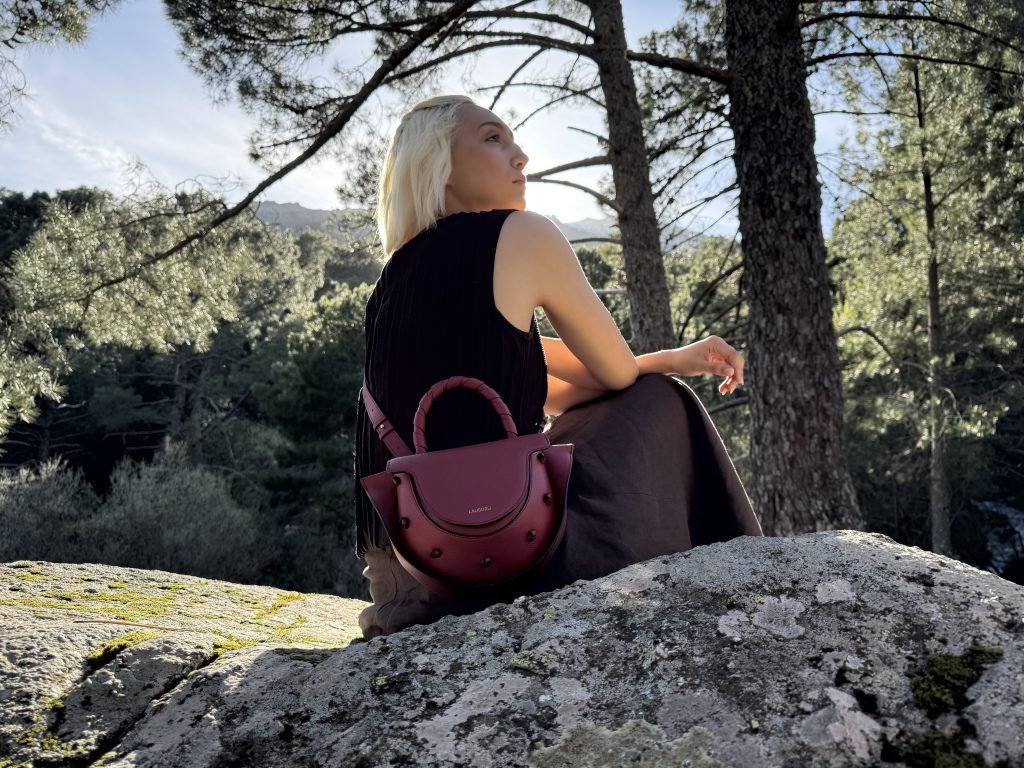
A leather bag is much more than a simple accessory. It is an object that has accompanied humanity for centuries, evolving with the tastes, needs, and technologies of each era. From the rudimentary pouches used in antiquity to carry belongings to the haute couture designs now showcased on runways around the world, the history of the leather bag is also a story of cultural, social, and aesthetic transformation.
On this journey, you will discover how leather craftsmanship has been fundamental to its development, how social and technological changes have influenced its design, and why, today, they remain synonymous with elegance, functionality, and durability.
Industrial Revolution: How it changed the history of the leather bag
With the arrival of the Industrial Revolution in the 19th century, the history of the leather bag took a decisive turn. Mass production, the development of new, faster and more affordable tanning techniques, and the emergence of the first sewing machines revolutionised the fashion and leather goods industries.
This new paradigm made leather bags accessible to a wider public. They were no longer exclusive to the nobility; the middle class could also afford them. At the same time, brands emerged that would later become luxury giants, such as Louis Vuitton, initially specialising in leather travel trunks.
In this context, leather bags began to be differentiated by use: handbags, travel bags, evening bags… Each design met a specific need, and fashion made them an essential part of everyday attire.
It was also the era when the bag began to detach from the belt or the body to become an independent accessory, often with clasp closures, handles, or even metal frames.
From this point onwards, the history of the leather bag would no longer be only that of a useful object, but also that of an accessory with aesthetic, emotional, and social significance.
20th century: Designers who shaped the history of the leather bag
The 20th century established the leather bag as a fashion icon. With the rise of the great design houses, legendary models emerged that are still essential references today: the Hermès Kelly, Chanel’s 2.55, the Birkin, Gucci’s Jackie… each with its own history, personality, and audience.
Designers such as Coco Chanel, Cristóbal Balenciaga, and Christian Dior not only included leather bags in their collections, but redefined them as objects of desire. Particular attention was paid to functionality—compartments, closures, adjustable handles—but also to style, with exotic leathers, unprecedented colours, and revolutionary shapes.
Social changes—such as women’s empowerment, entering the workforce, or feminist movements—also influenced the history of the leather bag. The bag was no longer just a decorative accessory; it now had to be practical, versatile, and suited to the pace of modern life.
In this context, accessible luxury brands also emerged, and designer bags became a status symbol, cementing their role in the collective imagination as an aspirational object. In short, the 20th century was the golden age of the leather bag as a fashion and cultural phenomenon.
Artisanal tradition vs. industry: The soul of the leather bag
Despite the advance of industrial production, the value of craftsmanship never disappeared. Brands such as Lauburu Spain, among many others, have chosen to keep the tradition of handcrafting alive, highlighting the quality of the leather, meticulous finishes, and the exclusivity of each piece.
Today, the handcrafted leather bag represents a statement of principles. In the face of standardisation by major fashion chains, handmade products champion the time, care, and cultural heritage behind every stitch.
Today’s customers increasingly value material traceability, sustainable processes, and artisans’ expertise. That is why handmade leather bags not only last longer, but also create an emotional connection with those who use them.
This duality—between mass production and artisanal craftsmanship—enriches the history of the leather bag, offering consumers the option to choose between fast fashion and lasting identity.
Contemporary trends in the history of the leather bag
In the 21st century, the history of the leather bag continues to be written with momentum. New trends are shaped by innovation, environmental awareness, and the fusion of technology and tradition.
Many designers are exploring vegan leathers, recycled materials, and eco-friendly production processes without losing the aesthetic and long-lasting essence of the traditional leather bag. In addition, personalisation has become a key differentiator: engravings, unique colours, bespoke designs… everything contributes to creating a personalised experience.
In parallel, leather bags continue to be key pieces in haute couture collections, street style, and international runways. Their versatility and resilience continue to win over diverse audiences: from young creatives to professionals seeking practical elegance.
Functionality has also been reinvented. Convertible bags, smart compartments, modular straps… everything points to a convergence of style, ergonomics, and sustainability.
The truth is that, despite passing trends, the leather bag remains an enduring icon, able to reinvent itself without losing its essence.
Conclusion: The history of the leather bag and its future legacy
Looking back helps us understand why the leather bag has survived centuries of change, styles, and revolutions. It is an object that has accompanied kings and peasants, actresses and artisans, executives and students. It has evolved with the technologies, cultures, and values of each society, without losing its purpose: to be useful, to be beautiful, and to last.
Today, more than ever, the leather bag represents a perfect combination of functionality, design, and heritage. Whether a luxury piece or an artisanal creation, it continues to symbolise elegance, attention to detail, and respect for tradition.
And so, with each new generation of designers and consumers, a new chapter is written in the history of the leather bag—one that will undoubtedly continue to inspire for centuries.