
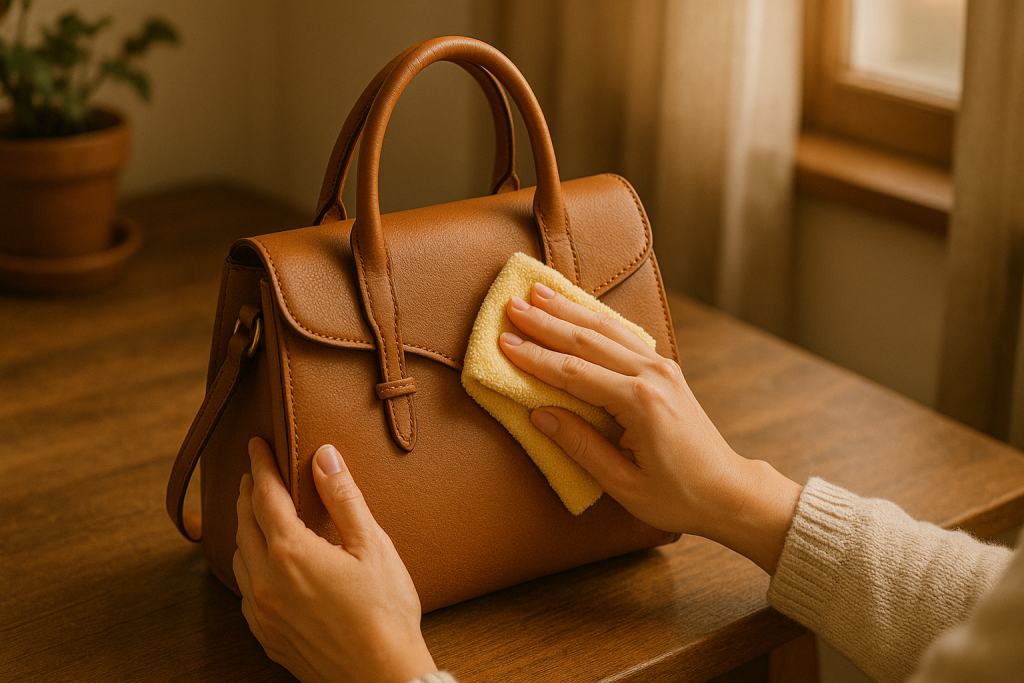
The Art of Keeping Your Leather Bag Impeccable
A well-cared-for leather bag is not only an elegant accessory but also a statement of style and good taste. And like everything valuable, it requires attention and care. If you own a leather bag—whether natural, treated, nubuck, or tanned leather—you have surely wondered how to clean a leather bag without damaging its finish or texture.
In our experience as specialists in leather bags, one of the most common mistakes users make is thinking that leather can be cleaned as if it were fabric or plastic. Nothing could be further from the truth. Leather is a living material, porous, sensitive to harsh chemicals, and with specific cleaning and maintenance needs.
In this article, we will guide you step by step, from the right products to the safest methods, so your leather bag looks like new for as long as possible. And if you sell leather bags, this content will be your perfect ally to provide value to your customers and strengthen your brand’s authority.
Why Is It Important to Clean a Leather Bag Correctly?
Cleaning a leather bag is not just an aesthetic matter. It is a matter of preserving the material, extending the accessory’s lifespan, and maintaining the value—and in many cases, the sentimental value—it holds for its owner.
Leather is delicate. Over time, dust, sweat, friction, and even temperature changes can alter its color, texture, or flexibility. If not cleaned properly, difficult-to-remove stains, cracks from dehydration, or even unpleasant odors from bacterial buildup may appear.
Additionally, when you clean and condition a leather bag properly, you are protecting it from moisture, UV rays, and potential agents that can accelerate its deterioration. This is especially important in humid climates, where leather tends to absorb environmental moisture more easily.
Therefore, understanding how to clean a leather bag correctly is not a luxury but a necessity. A bag can last decades and remain impeccable, as long as proper care is followed.
Most Common Types of Leather and How They Affect Cleaning
Not all leathers are the same, and this detail makes a significant difference in how you should treat them when cleaning. Here is an overview of the most common types:
1. Grain Leather or Full-Grain Leather
This is the outermost layer of the hide, the most resistant and highest quality. It has a smooth texture with visible pores and no corrections. It cleans easily but is very sensitive to grease or liquid stains.
2. Nubuck Leather
This is leather sanded on its outer surface, giving it a velvety feel. It is visually appealing but extremely delicate. It absorbs stains easily and does not tolerate water well.
3. Split Leather
Derived from the inner side of the hide, it is rougher, similar to suede. It requires specific brushes to remove dirt and should never be wet, as it could become deformed.
4. Treated or Patent Leather
This type of leather usually has a glossy or plasticized finish. It is more resistant to dirt and water but can crack if not hydrated regularly.
5. Synthetic Leather
Although not real leather, many users confuse it. It does not require the same care nor responds the same way to cleaning products.
Materials and Products You Need to Clean a Leather Bag
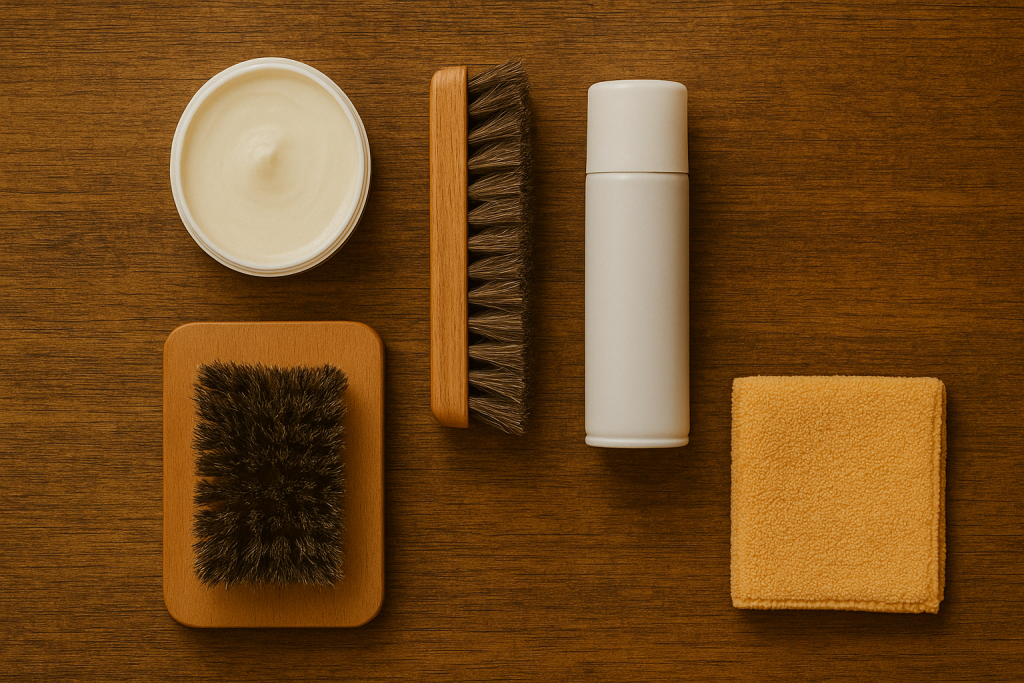
Before you start cleaning your bag, it is essential to gather the right products. These are the basics we recommend as a specialized brand:
Recommended Products to Clean Your Leather Bag:
- Glycerin soap or leather-specific soap
- Leather conditioner cream (silicone-free)
- Soft microfiber cloths
- Natural bristle brush (for split leather or nubuck)
- Waterproofing spray protectors
- Isopropyl alcohol (only for specific stains and used with caution)
Products You Should Avoid to Clean Your Leather Bag:
- Multi-purpose cleaners
- Alcohol wipes
- Household degreasers
- Pure vinegar
- Excessive water
Often, in an attempt to “fix quickly,” users apply homemade solutions that prove counterproductive. The key is to use products specifically designed for leather and always apply them in moderation.
Step by Step: How to Clean a Leather Bag Without Damaging It
Here is the professional method we recommend for safe, basic cleaning:
1. Remove Surface Dust
Use a dry, soft microfiber cloth. Wipe over the entire surface of the bag, including seams and corners.
2. Apply Specific Soap
Slightly dampen another cloth with warm water and a small amount of glycerin soap. Rub gently in circular motions. Do not over-wet the leather.
3. Dry Thoroughly
Use a clean, dry cloth to remove moisture. Do not use a hairdryer or expose to sunlight.
4. Condition the Leather
Apply a small amount of leather conditioner cream with another clean cloth. Allow it to absorb for a few hours.
5. Protect the Surface
Once dry, you can apply a waterproofing spray to protect it from water and dirt.
👀 Expert Tip: Do not clean the entire bag at once. Test first on a less visible area and observe how the leather reacts.
What to Do If the Bag Has Difficult Stains or Grease?
Grease, ink, wine, makeup, or dark liquid stains are the most feared on leather bags. But all is not lost. Here is what to do in each case:
For Recent Stains:
- Grease or oil: Sprinkle cornstarch or talcum powder on the stain. Let it sit for 2–3 hours, then brush gently. Repeat if necessary.
- Pen ink: Use a cotton swab with a bit of isopropyl alcohol. Rub gently in circular motions only on the stain. Do not spread!
- Dark liquids (wine, coffee): Dry immediately with absorbent paper. Then clean with a damp cloth and neutral soap.
For Old or Stubborn Stains:
- Use specialized products such as leather ink erasers or leather stain removal kits.
- If you do not achieve results, the most prudent course is to consult a professional in leather restoration. Forcing the cleaning can discolor or crack the leather.
👀 Important: Never rub vigorously. Friction damages the protective layer of the leather and can cause the stain to penetrate deeper.
Post-Cleaning Care: How to Condition, Protect, and Store Your Leather Bag
Once clean, it is vital to keep the leather nourished, protected, and properly stored. These steps extend its beauty and functionality:
Leather Conditioning
Use special creams for natural leather every 2 or 3 months. Apply them with a soft cloth in circular motions and let rest for at least 8 hours before using the bag.
Protection Against Water and Sun
- Apply waterproofing sprays if you live in humid areas or during rainy seasons.
- Avoid exposing it to direct sunlight for prolonged periods. Solar radiation can “burn” the leather and cause stains or color loss.
How to Store Properly
- Store the bag stuffed with tissue paper or bubble wrap (never with newspaper, as it can transfer ink).
- Use a breathable fabric cover, never plastic.
- Store it upright, with no weight on top, in a dry, cool place.
Common Mistakes When Cleaning Leather Bags (and How to Avoid Them)
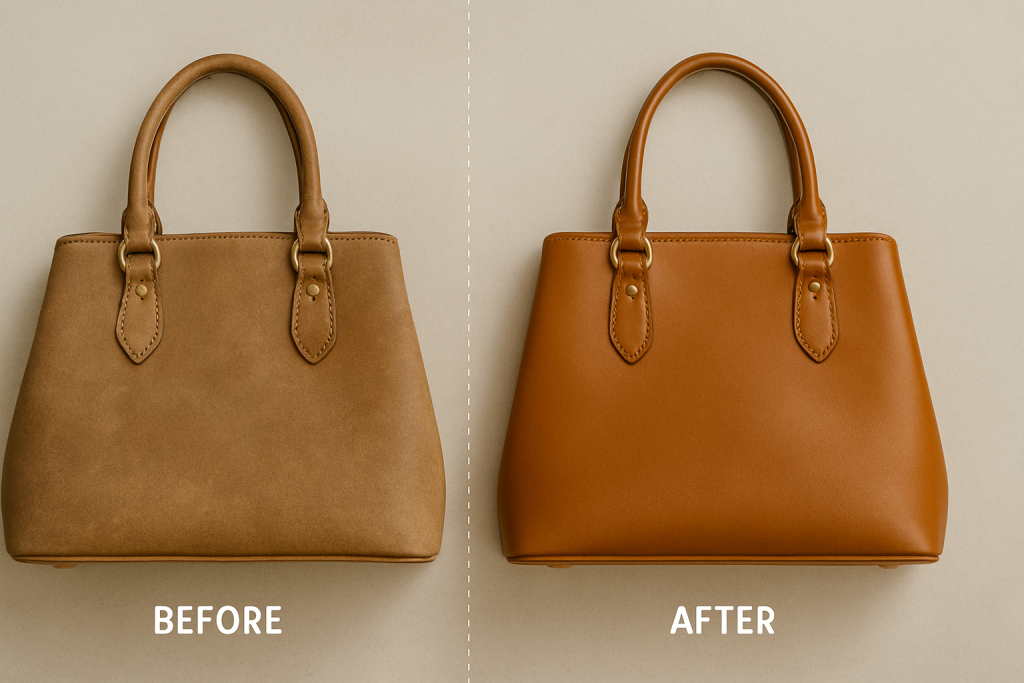
These are some of the most common mistakes we have seen as a brand specializing in leather bags, which can ruin even the most expensive bag:
Using Harsh Household Products
Pure vinegar, ammonia, or multi-purpose cleaners. These products deteriorate the leather surface, remove its protective layer, and dry out the leather.
Over-Wetting
Water is not leather’s friend. Saturating it can deform it or cause it to crack when drying.
Storing the Bag Dirty
Dust and dirt become more embedded over time. If you store the bag dirty, especially in humid environments, it can develop mold or unpleasant odors.
Not Testing the Product First
Always test any cleaner or conditioner on a hidden area of the bag. Some leathers react poorly, even to mild products.
Ignoring the Manufacturer’s Labels
Some bags have specific instructions. Ignoring them can void warranties or cause irreversible damage.
Avoiding these mistakes can ensure your leather bag accompanies you for many, many years.
Conclusion: Caring for Your Bag Is Caring for Your Investment
A leather bag is not just an accessory: it is an investment. Every detail matters—from the materials to its maintenance—and as a specialized brand, we see this every day. Proper care not only extends the product’s lifespan but also enhances its natural beauty and allows its owner to carry it with pride and elegance.
This article has been designed as a definitive guide, written from the knowledge of those of us who work with leather every day. If you sell bags, we invite you to share these tips with your customers. And if you are a user, remember: with the right products and a little care, your leather bag will always look like the first day.